Do I Need a Website for My Small Business?
Not necessarily. Plenty of small businesses do well without one. For others, a website is the best way they have of winning new customers.
It depends on how customers find you, how much each sale is worth to you, and how much people need to know before they buy. This guide gives you a quick checklist, a simple way to work out whether a website would pay for itself, and five worked examples.
In this guide:
- A quick checklist
- The one-number test
- Five ways a website helps a small business
- How much a website costs
- Five worked examples
- Break-even calculator
- When you can skip a website
- Common questions
Do you need a website? A quick checklist
You probably need a website if:
- People search Google for the services you offer.
- A few extra customers would earn enough to cover the cost.
- Customers want reassurance before buying, such as past work, reviews or qualifications.
- People keep asking you the same questions about prices, services or the areas you cover.
- Online bookings, quote requests or orders would save you time or win you business.
You can probably skip it, for now, if:
- Most customers walk in or find you on Google Maps.
- Each sale earns you very little profit.
- Your Google Business Profile or social media page already answers what people ask.
- You're already fully booked.
The one-number test: will a website pay for itself?
Instead of asking whether you need a website, ask whether one would pay for itself. The maths is simple:
Extra sales needed = yearly website cost ÷ profit per extra sale
Take a website that costs $500 a year. A roofer making $500 profit per job covers it with a single extra job. A café making $2 on each coffee would need 250 extra coffees. It's the same website, but the decision is very different.
Profit per sale means what you keep after the cost of delivering it, such as food, materials or staff time. A $20 lunch might leave you with $7.
The yearly cost is the subscription, plus any setup fee and, if you count it, the time you spend on the site. Jump to the calculator to work out your own number, or read on to see what a website can do and what it costs.
Five ways a website helps a small business
1. More people can find you on Google
A website gives people who have never heard of you a way to find you. Social media profiles can show up in search results too, but a website lets you choose which services, places and questions you appear for.
A roofer could have separate pages for flat roof repairs, chimney repairs, roof replacements and emergency call-outs, each showing past work and the areas covered. Every page is another chance to appear when someone searches for exactly that service.
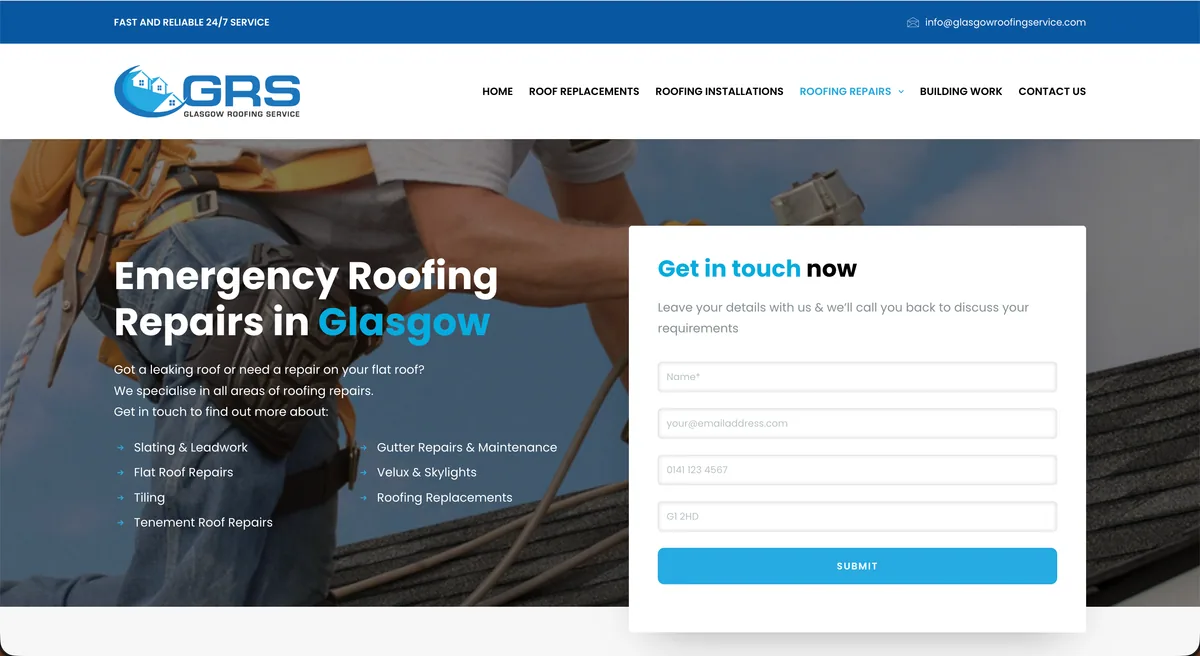
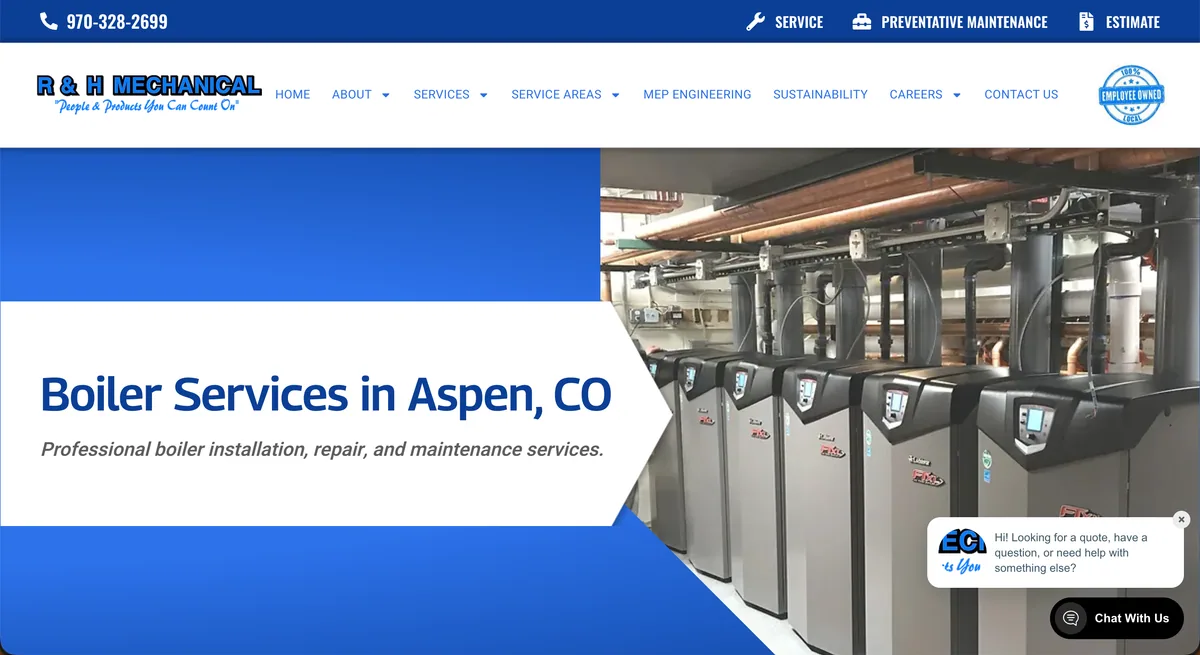
Improving how your site shows up in search is called SEO, or search engine optimisation. Mostly it means useful pages, a fast site and information that search engines can easily understand. AI assistants can read public websites too, although that doesn't guarantee they'll recommend you. And unlike a Facebook page, a website works for people who don't use social media.
2. Your best work stays easy to find
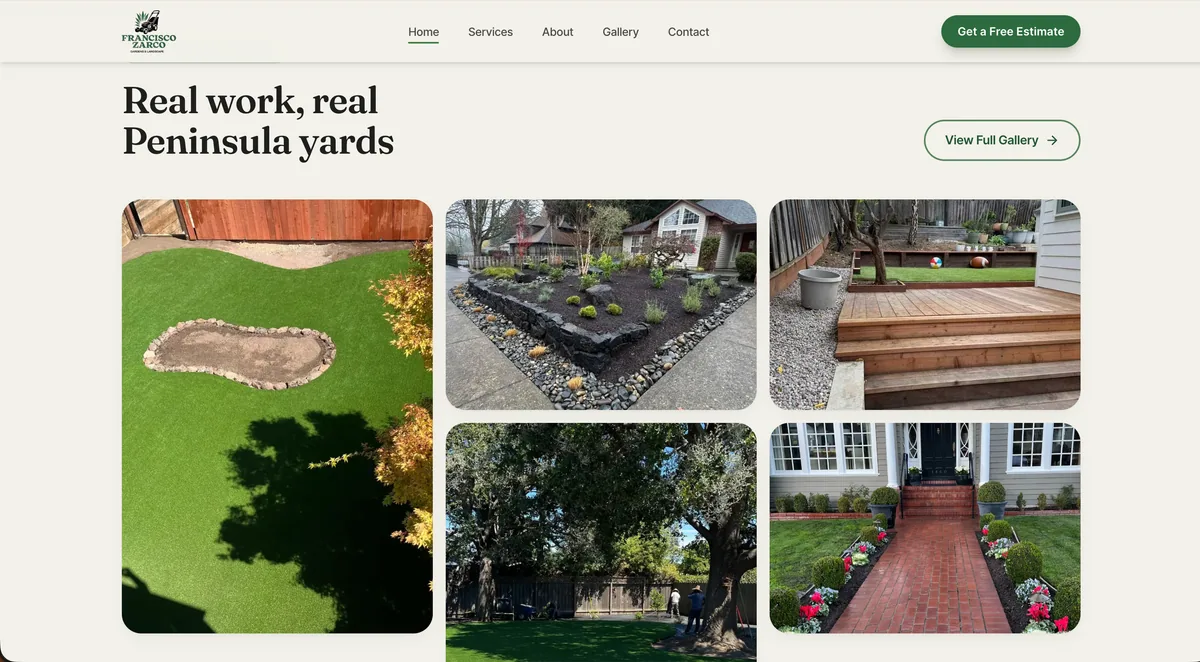
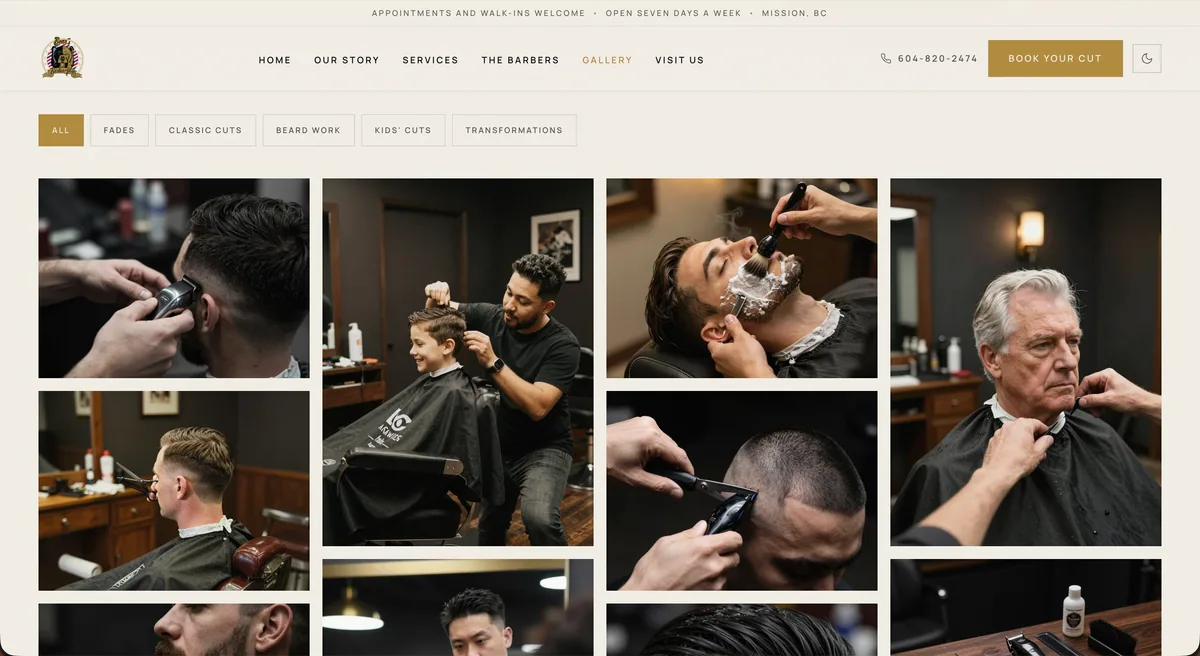
Social media feeds push older posts down. Say a landscape gardener finished a beautiful garden makeover six months ago. By now it's buried under dozens of newer posts, and a potential customer may never see it.
On a website, that project can sit permanently in a portfolio next to similar work. You also decide what visitors see and in what order: your services, then examples, then reviews, then a quote request. You set the path instead of leaving it to a feed.
3. Customers can check you out before they commit
A bad lunch costs a few dollars. A bad builder can cost thousands and months of disruption. The bigger the decision, the more reassurance people want before they get in touch.
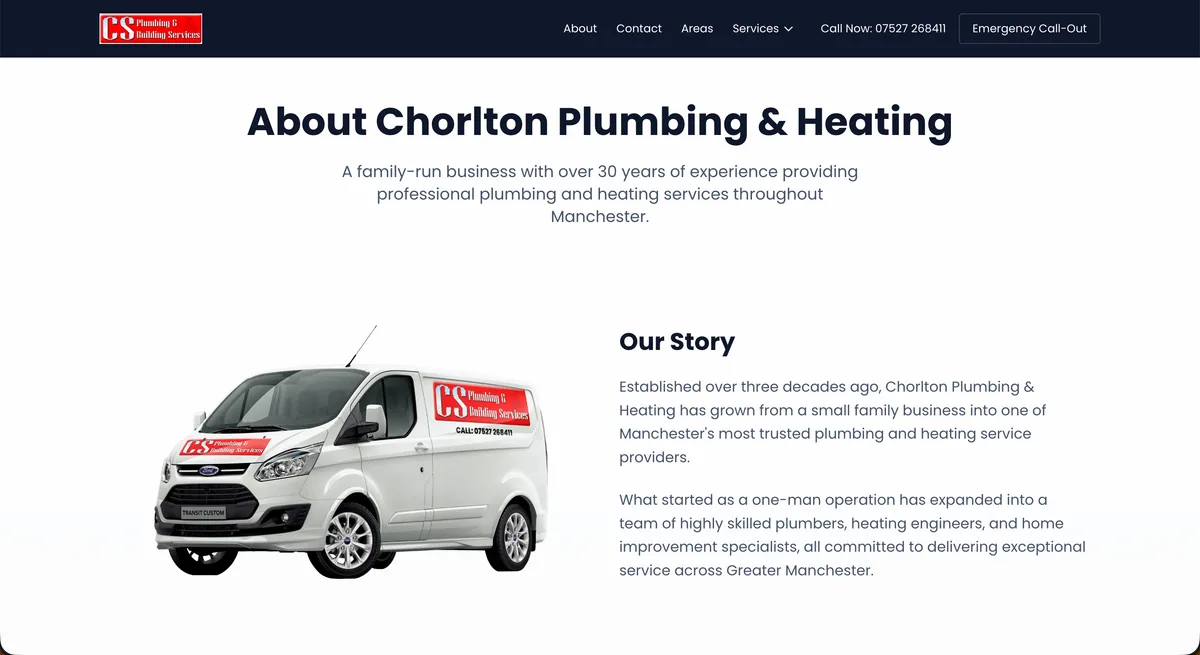
A website is where you provide it: photos of finished work, your experience, qualifications and insurance, your team and genuine reviews, all presented in your own colours, logo and photography.
A website doesn't make a business trustworthy on its own, because anyone can build one. But it's the best place to show the evidence.
4. You can answer questions before people ask
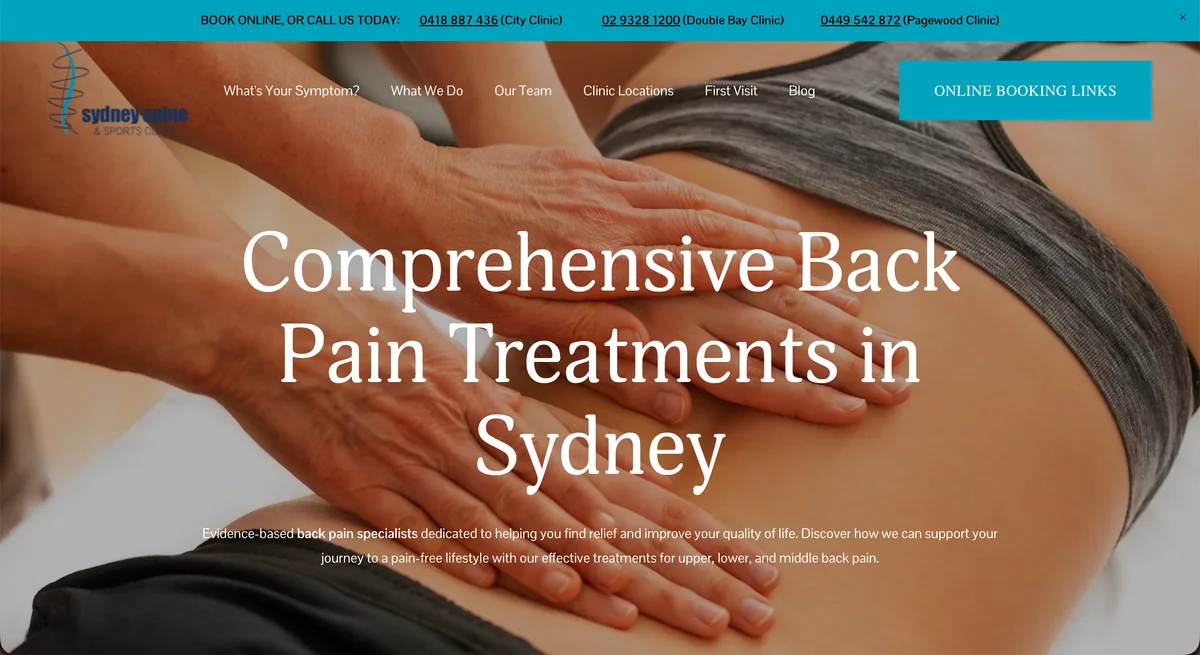
Social media is good for quick updates but awkward for detail. Patients of a physiotherapy clinic want to know what each treatment involves, what it costs, how long it takes, whether insurance covers it and who will treat them.
A website can give each treatment its own page with prices, FAQs and booking details. Unlike most PDF brochures, it's easy to read on a phone and easy to keep up to date. And when your prices, hours and service areas are online, fewer people need to call and ask.
5. People can book, order or ask for a quote at any time
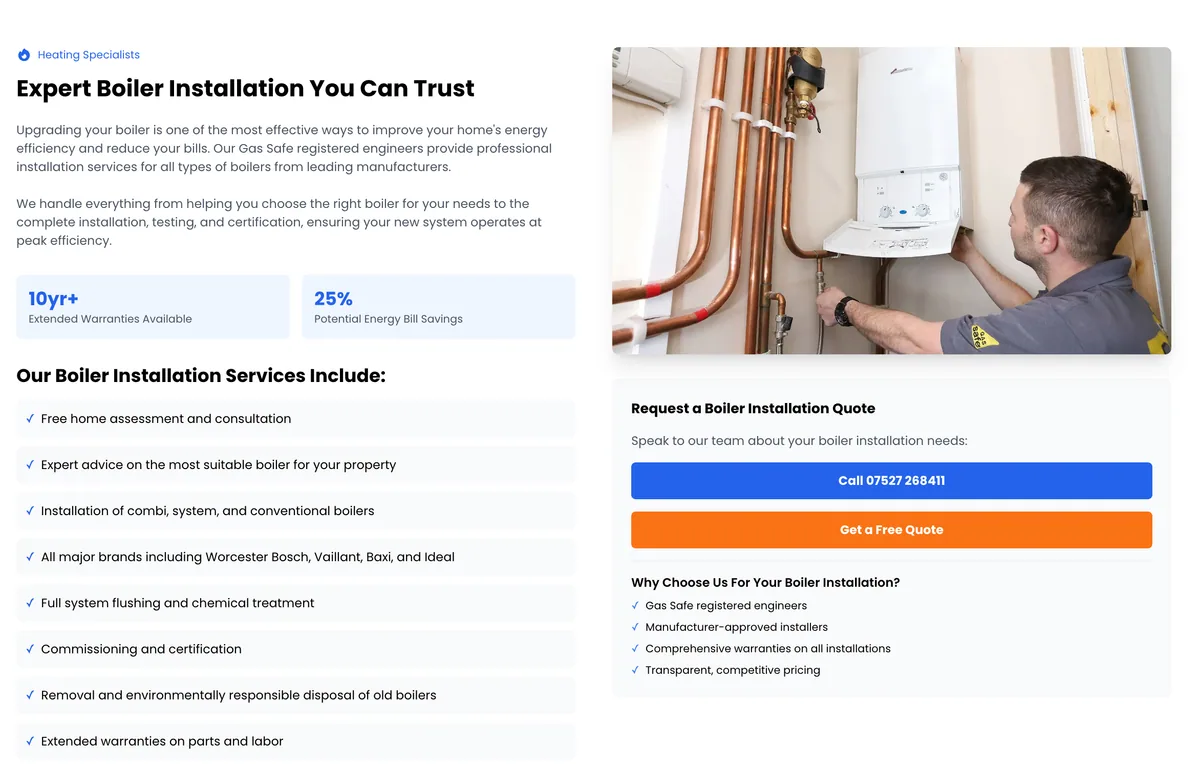
A website takes enquiries while you're closed or busy on a job. A plumber's quote form can ask what needs fixing, where and how urgently. A dog groomer can take appointment requests, and a restaurant can take table bookings without anyone answering the phone.
The enquiries tend to be better, too. Someone who has already seen your prices, service area and past work is more likely to be a good fit, so you spend less time on people who were never going to buy.
How much does a small business website cost?
There are four common ways to get a website, from doing it all yourself to paying someone to build and grow it:
| Option | Setup | Each year | Who does the work |
|---|---|---|---|
| Website builder (Wix, Squarespace, WordPress.com) | $0 | $50–$300 | You: 20–40 hours to set up, then a few hours a month to keep it current. SEO and growth work are extra |
| Site built by a designer | $1,000–$3,000 | $50–$300 | The designer builds it; you update it or pay for changes. SEO and growth work are extra |
| Designer plus an SEO agency | $1,000–$3,000 | $6,000–$12,000 | The agency, with a little of your time to review |
| Flax Managed | $0 | $480 ($50 a month on monthly billing) | Built for you, with managed updates and SEO enhancements included |
Prices checked November 2026, with annual billing. Flax Managed is $50 a month, or $480 a year billed annually. Builder plans run from WordPress.com Personal ($48 a year) to WordPress.com Business ($300 a year). Designer fees are the typical range for a basic site in GoodFirms' 2026 survey. The SEO figure is the most common retainer range of $500–$1,000 a month in SE Ranking's 2025 survey. These are planning benchmarks, not quotes, and they exclude domains and taxes. For plan-by-plan detail, see Flax compared with Wix, Squarespace and WordPress.
Don't forget SEO. If customers find businesses like yours by searching Google, a website only pays off once it shows up in those searches. That takes ongoing work: useful service pages, regular updates and checking what people search for. With a builder or designer site, that work falls to you or a paid specialist. If most of your customers come from referrals or walk-ins, you can get by with much less.
Don't forget your time. Three hours a month at $25 an hour comes to $900 a year, which is often more than the subscription. It's not a bill you pay, but it is time you're not spending on paid work. The calculator below lets you include it.
Is a website worth it? Five examples
To keep things simple, here are three yearly budgets:
- $500: a website builder plan or Flax Managed ($50 a month, or $480 billed yearly).
- $2,000: a site built by a designer, in its first year.
- $10,000: a site built by a designer plus a monthly SEO retainer.
This is how many extra sales each business would need in a year to cover each budget:
| Business | Profit per extra sale | $500 a year | $2,000 a year | $10,000 a year |
|---|---|---|---|---|
| Lunch restaurant | $7 a visit | 72 | 286 | 1,429 |
| Dog groomer | $35 an appointment | 15 | 58 | 286 |
| Roofer | $500 a job | 1 | 4 | 20 |
| Dental practice | $200 an appointment | 3 | 10 | 50 |
| Online gift shop | $20 an order | 25 | 100 | 500 |
These numbers don't predict sales. They show what a website would need to achieve to pay for itself.
A small lunch restaurant
72 extra visits a year is only one or two a week. But would a website bring them in? If most customers walk past or find you on Google Maps, probably not. A complete Google Business Profile with your hours, photos, menu and reviews may do the job.
It's a different story if you host events: one private booking could cover the whole year.
Verdict: A simple lunch spot can probably skip it. Bookings, events or higher-end dining make the case.
A dog grooming salon
15 extra appointments a year is just over one a month. And grooming clients come back. A dog booked every eight weeks means about six visits a year, or $210 in profit, so three new regular clients would cover a $500 site.
Verdict: Worth it if you have spare appointments to fill.
A roofing company
One extra job covers a $500 site. Even a designer plus an SEO agency needs only about 20 jobs a year, fewer than two a month.
Roofing customers also research before they call. They want to see finished work, insurance, reviews and proof that you work in their area.
Verdict: A strong case at any budget, as long as the site brings in jobs you wouldn't have won otherwise.
A dental practice
Three extra appointments cover a $500 site, and 50 cover a $10,000 one. Patients research treatments, dentists and prices, especially for bigger decisions like implants or braces, and a new patient may keep coming back for check-ups for years.
The catch: you need room for new patients, and they have to be people who wouldn't have booked anyway.
Verdict: Usually a clear yes, especially if you're accepting new patients.
An online gift shop
25 orders a year is about two a month. But if you already sell on a marketplace or Instagram, a website might just move existing orders rather than add new ones. That can still save on marketplace fees, but getting visitors to a new shop takes work. Remember to include payment, packaging and delivery costs when you work out your profit per order.
Verdict: Worth it if it brings new orders, cuts selling fees or encourages repeat buying. Don't expect customers to find a new shop on their own.